Yancheng Haite Machinery Technology Co., Ltd. was founded in 1992, after nearly 30 years of development and growth, has developed into a professional hydraulic equipment and deck machinery manufacturing enterprises, The company covers an area of more than 160,000 square meters, the existing staff 370 people, including 46 engineering and technical personnel, 10 senior engineers.
High quality
Our products are manufactured or executed to very high standards, using the finest materials and manufacturing processes.
Company honor
ISO9001:2015 quality management system; CCS, DNV, GL, KR, ABS, BV, LR, NK, RINA classification society certification of 9 countries.
Global shipping
Haite hydraulic products have been exported to Europe, Middle East, Southeast Asia, Middle Asia, Russia and the other countries and regions.
Competitive price
We offering a higher-quality product or service at an equivalent price. As a result we have a growing and loyal customer base.
What Is Engineering Hydraulic Cylinder
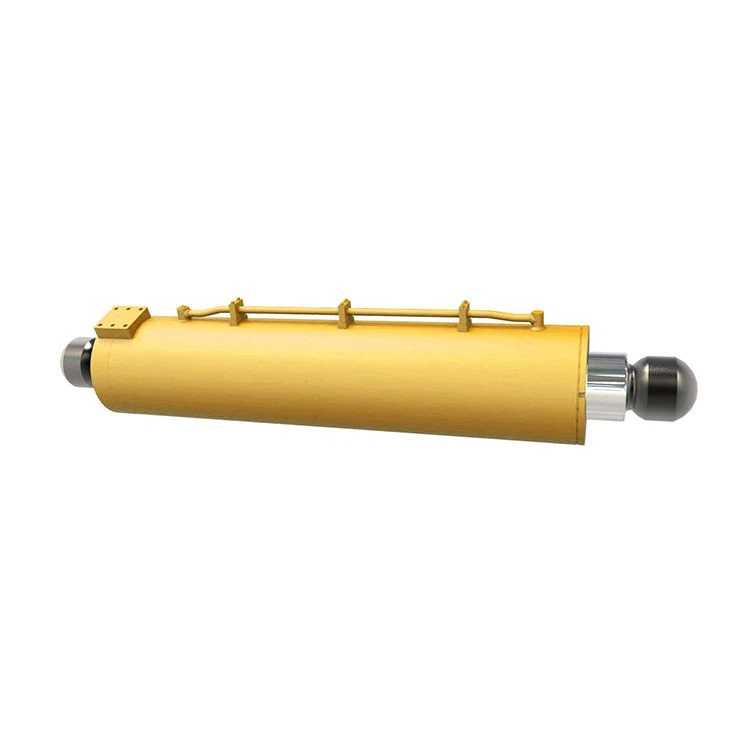
A engineering hydraulic cylinder is a mechanical actuator that provides a constant force in a single plane of motion. A piston, attached to a rod, moves back and forth inside a cylinder barrel. The piston rod exits the cylinder through the cylinder head, also known as the gland. The cylinder bottom closes up one end of the barrel. Piston rings and seals are designed to slide. Construction equipment (engineering vehicles), manufacturing machinery, lifts, and civil engineering are just a few fields that benefit from hydraulic cylinders.
Speed
With the use of different methods—such as by fitting them with a large pump—hydraulic cylinders can be used at high speeds. Speed is independent of these mechanisms, so it is not affected by the weight of the load. On the other hand, electro-mechanical devices move slower under heavy weight.
Accuracy & precision
Hydraulic cylinders are also far more accurate and precise, thanks to a combination of hydraulic oil and servo valves. This equipment can repeatedly hit targets within a small range.
Power
Despite their small size, hydraulic cylinders can produce a large amount of force. With such high efficiency, you won’t need to worry about obtaining support for a larger actuator, such as a pneumatic model.
Low requirements
Hydraulic cylinders also conserve far more energy than their pneumatic and electro-mechanical counterparts. Little power is required to operate these mechanisms, conserving energy and helping businesses save money.
Resistance to harsh conditions
Lastly, hydraulic cylinders are incredibly reliable, even in the harshest weather conditions. When you need to generate plenty of force from little power, these parts should be your go-to choice.
Single acting cylinders
This type of cylinder is referred to as single acting cylinder because the head end port of these cylinders works in a single direction. As soon as the liquid gets pumped into the cylinder barrel, it will extend the piston rod. An external force or a load string is needed for the generation of the return operation. Then external energy is used to drain the fluid from barrel to the reservoir. An example of the single acting cylinder is a hydraulic jack.
Double acting cylinders
Double acting cylinders are designed with ports in both the head and rod ends which make it easier to pump fluid. The ports will control the flow of the liquid and encourage movement in both ways. When the hydraulic fluid is pumped to the rod end, the piston rod is retracted. On the other hand, pumping the fluid to the head end will help in extending the piston rod. Applications of this type include the raising and lowering devices. Two main categories of double acting cylinders are differential type and synchronous types.
Tie-rod cylinders
Tie-rod cylinders are most commonly used in the manufacturing and industrial applications. Ease of maintenance, assembling, and repairing are some of the benefits of this type of cylinders. Threaded steel rods are used in order to hold the end caps of the tie rod cylinders. Tie-rod end caps are useful for preventing leakages of the fluid.
Welded rod cylinders
In the welded rod cylinders, end caps are directly connected to the barrel, which make the assembling and disassembling processes difficult for these cylinders. These cylinders are suitable for mobile applications because of the features of this type of cylinders such as compact construction, internal bearing lengths, and duty cycle.
Telescopic cylinders
Telescopic cylinders can be single or double acting. This type of cylinder homes more than five tubings. This is a single or double acting cylinder. Telescopic cylinder comprises more than five tubings. Each of these tubings nests inside one another. The diameter of each of these nested tubings or stages becomes lesser.
Civil engineering
As this industry requires a great deal of heavy-duty machinery, Hydraulic Cylinders are in constant demand. From vehicles like bulldozers, trenchers and excavators to their various attachments, Hydraulic Cylinders are present in almost every large machine relating to the industry.
Agriculture
Hydraulic Cylinders are used heavily within this industry. Hydraulic Cylinders are common in heavy-duty machines like crop harvesters, tractors and loaders. They are often used in the attachments for certain machines as well, including hydraulic wood splitters and planters.
Energy
Hydroelectric stations utilise Hydraulic Cylinders as a component of their gate controls. These cylinders help to control the water flow by opening and closing the water gates as and when required.
Mechanical engineering
Along with every other use, Hydraulic Cylinders are extremely handy in automated production lines. They are particularly useful in conveyor belt systems and specific feeding devices. As well as this they are an integral part of plastic forming machines and various transportation devices.
Shipbuilding
Unsurprisingly, thanks to their reliability and incredible design, Hydraulic Cylinders are essential to the Shipbuilding industry. Hydraulic Cylinders can be found in transportation equipment, various essential hoists, and are necessary to many nautical steering mechanisms.

Cylinder base
The barrel is enclosed at one end by the cylinder base, which can be attached to the barrel via a weld, threading, bolts, or tie rods. At one end of the cylinder, the base secures the mounting solution and tightens the seal to maintain pressure and stop fluid leakage. The base and hydraulic cylinder are mounted or welded to the main body of your mobile equipment.

Cylinder head
The cylinder head is located at the opposite end of the barrel. By sealing off the barrel's opposite end and allowing the piston to extend and retract while under pressure, the head preserves hydraulic pressure. Seals and bearings found in cylinder heads help to align the piston rod while also sealing the barrel, head, and opening.

Piston
The piston, which is located inside the barrel and is connected to the rod, carries the force of the hydraulic fluid, enabling the barrel to expand or retract. To allow seals to fit around it and maintain hydraulic pressure inside the barrel, a piston is frequently cut with a number of grooves. The piston is linked to the piston rod by threads, bolts, or nuts and transfers its power to the piston rod.

Piston rod
The piston rod normally attaches to the piston and continues from the cylinder through the head. It is made of cold-rolled steel that has been hard chrome-plated. The hydraulic cylinder is connected to the working machine part, such as a plough or dump body, via a piston rod. The piston rod is directly attached to the mounting attachment.
Undertake regular cylinder maintenance
Regular hydraulic cylinder maintenance is important for optimal performance. Make sure you keep a close eye on the condition of the cylinder rod for any signs of corrosion, pitting or wear. Too much moisture can cause corrosion, whether this is from the air or from within the hydraulic fluid itself. If water contamination occurs within the fluid, it can cause major failure of the component or system. The oil therefore needs to be thoroughly cleaned as soon as possible. Moreover, corrosion encourages wearing of the seals, due to increased friction. Pitting causes a similar problem.
Misalignment is often the main cause of uneven wear within a cylinder. Premature wearing of the bearing seals and rod can be caused by side loads, allowing the rod to rub on one side of the bearing. The best course of action for this type of rod damage, is more often than not, a re-chrome or polish. If a cylinder rod is beyond repair, a replacement is the best course of action. However, before you re-install the new rod, it is important to first remove the problem that originally caused the damage. And subsequently making the new cylinder more cost-effective.
Keep your hydraulic oil clean
Many hydraulic failures occur because of hydraulic oil contamination. If hydraulic oil is contaminated, it must be thoroughly cleaned as soon as any contamination has been found. It is also best to fit high-efficiency filters and change them when necessary.
If a filter has a build-up of debris, a differential pressure gauge can be installed to give you a good indication as to when they need to be changed. This means that you will be preventing a bypass, where the oil flows through the system unfiltered.
Rotate or alternate cylinders
If the risk of downtime is not an option, it is always a good idea to hold ‘critical spare’ cylinder parts (see below) or alternate the usage between different cylinders. This break between uses keeps the cylinders in good shape, despite possible particle contamination and harsh operating conditions. It is also wise to undertake maintenance on these cylinders when they are removed from the system, so that they can be repaired if necessary.
Before re-assembling a cylinder, you may want to first replace all of the seals. Inspection of the cylinders may also give you an idea as to the condition of the entire system. For example, if there is a consistent varnish throughout your system, it could mean that the oil temperature is too high and it needs to be altered.
Maintain the accessories of your cylinder
Each separate part that makes up your hydraulic cylinder is just as important as the cylinder itself. For example, if a pivot pin or clevis is worn or damaged, this could cause slop and play within the joints of the cylinder. This leads to misalignment and wear or more permanent damage.

Under normal circumstances, when the engineering machinery is working, the hydraulic system of the Engineering hydraulic cylinder generates a lot of heat due to various pressure losses, which causes the temperature of the system hydraulic oil to rise, and the hydraulic oil is easily oxidized when the system temperature is too high. Because organic acids are generated after oxidation, organic acids will corrode metal components, and at the same time generate gel-like deposits that are insoluble in oil, which increases the viscosity of hydraulic oil and deteriorates its anti-wear performance.

Engineering hydraulic cylinder is widely used in steel, light industry, military, environmental protection, hydropower and other fields due to its good characteristics. Its principle is to convert the reciprocating motion of the hydraulic cylinder into the positive and negative swing rotation of the gear shaft through the rack and pinion, and at the same time convert the thrust of the reciprocating cylinder into the output torque of the gear shaft. However, it should be noted that since the swing angle of the gear shaft of the hydraulic cylinder is proportional to the length of the rack, the swing angle of the gear shaft can be selected arbitrarily and can be greater than 360 degrees.

Users who use Engineering hydraulic cylinder know that it is a hydraulic component that provides pressurized liquid in a hydraulic transmission, and it is also a kind of pump. The working principle of the hand pump is to convert the mechanical energy of power machines (such as electric motors and internal combustion engines) into pressure energy of liquids. The output flow can be adjusted according to the needs is called a variable pump, and the flow cannot be adjusted is called a quantitative pump. The oil pipe of the Engineering hydraulic cylinder plays a very important role in the entire working process.
Determine your application requirements
The first step in selecting the correct hydraulic cylinder is to understand your specific application requirements. Consider factors such as load capacity, stroke length, operating pressure, and environmental conditions. Determine the force and speed needed for your application, as well as any space limitations or mounting constraints. By identifying these requirements upfront, you can narrow down your options and choose a hydraulic cylinder that meets your specific needs.
Consider cylinder type
Hydraulic cylinders come in various types, including single-acting, double-acting, and telescopic cylinders. Single-acting cylinders exert force in one direction, while double-acting cylinders provide force in both directions. Telescopic cylinders, on the other hand, consist of multiple nested stages that enable a longer stroke length. Evaluate your application's needs to determine which type of cylinder is best suited for your project. Factors such as space limitations, speed requirements, and load characteristics will help you make an informed decision.
Assess cylinder size and capacity
Proper sizing of the hydraulic cylinder is crucial to ensure optimal performance and safety. Consider the load capacity required for your application, taking into account both static and dynamic loads. It's essential to choose a cylinder with a sufficient capacity to handle the maximum load without compromising safety or causing premature wear. Manufacturers provide load charts and technical specifications for their cylinders, enabling you to select the appropriate size and capacity based on your application requirements.
Check seal and material compatibility
Hydraulic cylinders rely on seals to prevent leakage and maintain hydraulic fluid integrity. It is crucial to ensure that the seals used in the cylinder are compatible with the hydraulic fluid and any other chemicals or substances present in your application. Different materials, such as Nitrile, Polyurethane, or Viton, offer varying degrees of resistance to specific fluids and operating conditions. Consult with the cylinder manufacturer or a hydraulic expert to determine the best seal material for your application to avoid potential issues and maintain the cylinder's performance over time.


Yancheng Haite Machinery Technology Co., Ltd. was founded in 1992, after nearly 30 years of development and growth, has developed into a professional hydraulic equipment and deck machinery manufacturing enterprises, The company covers an area of more than 160,000 square meters, the existing staff 370 people, including 46 engineering and technical personnel, 10 senior engineers.


As one of the most professional engineering hydraulic cylinder manufacturers and suppliers in China since 1992, we're featured by quality products and competitive price. Please rest assured to buy cheap engineering hydraulic cylinder in stock here from our factory. Contact us for customized service.
Construction Machine Hydraulic Cylinder, hydraulic civil engineering cylinders, Mining Hydraulic Cylinders