Yancheng Haite Machinery Technology Co., Ltd
+86-515-86290308
Company Profile
 

Yancheng Haite Machinery Technology Co., Ltd. was founded in 1992, after nearly 30 years of development and growth, has developed into a professional hydraulic equipment and deck machinery manufacturing enterprises, The company covers an area of more than 160,000 square meters, the existing staff 370 people, including 46 engineering and technical personnel, 10 senior engineers.


Why choose us?

High quality

Our products are manufactured or executed to very high standards, using the finest materials and manufacturing processes.

Company honor

ISO9001:2015 quality management system; CCS, DNV, GL, KR, ABS, BV, LR, NK, RINA classification society certification of 9 countries.

Global shipping

Haite hydraulic products have been exported to Europe, Middle East, Southeast Asia, Middle Asia, Russia and the other countries and regions.

Competitive price

We offering a higher-quality product or service at an equivalent price. As a result we have a growing and loyal customer base.


What is Agricultural Hydraulic Cylinders


Agricultural hydraulic cylinders play a crucial role in powering and controlling heavy agricultural machinery. They are used in tractors, harvesters, loaders, and sprayers to perform tasks such as lifting, lowering, tilting, and extending.


Benefits of Agricultural Hydraulic Cylinders
 
01/

Enhanced efficiency
Hydraulic cylinders provide farmers with increased operational efficiency. With improved control and power, agricultural machinery can perform tasks faster and with greater accuracy, minimizing downtime and maximizing productivity. This efficiency translates into cost savings and higher yields.

02/

Increased precision
The precise control offered by hydraulic cylinders enables farmers to fine-tune various agricultural operations. Whether it’s adjusting the depth of tillage, regulating water flow in irrigation systems, or controlling the placement of seeds, hydraulic cylinders enable precise and consistent actions. This precision optimizes resource utilization, reduces waste, and promotes sustainable farming practices.

03/

Reduced labor requirements
By automating and mechanizing tasks, hydraulic cylinders reduce the need for manual labor on the farm. With advanced machinery and implements, farmers can accomplish tasks that previously required multiple workers. This not only addresses labor shortages but also allows farmers to focus on higher-value activities such as crop management and planning.

04/

Versatility and adaptability
Hydraulic cylinders can be integrated into various agricultural equipment and systems, making them highly versatile. Farmers can easily switch between different implements or adjust machinery settings as per their specific requirements. This adaptability enables farmers to respond swiftly to changing conditions and optimize their farming practices accordingly.


Types of Agricultural Hydraulic Cylinders

Single-acting hydraulic cylinders
Single-acting hydraulic cylinders are among the most common types, known for their simplicity and reliability. These cylinders exert force in one direction, typically extending the piston rod using hydraulic pressure. The retraction of the rod is achieved through an external force, such as a spring or gravitational pull. Single-acting cylinders are often used in applications where the load needs to be lifted or moved in one direction, such as dump trucks, forklifts, and agricultural machinery.

Double-acting hydraulic cylinders
Double-acting hydraulic cylinders are versatile and widely used in various industries. Unlike single-acting cylinders, these cylinders can exert force in both directions, allowing for precise control and bidirectional movement. They consist of two chambers—one for extension and the other for retraction—connected to a hydraulic power unit. Double-acting cylinders are commonly found in construction equipment, manufacturing machinery, and material handling systems.

Telescopic hydraulic cylinders
Telescopic hydraulic cylinders, also known as multistage cylinders, feature multiple nested stages that provide an extended stroke length while maintaining a compact design. These cylinders are widely used in applications where a long stroke is required in limited spaces, such as dump trailers, cranes, and garbage compactors. Telescopic cylinders can provide impressive reach and lifting capabilities while minimizing the overall length of the cylinder.

Welded hydraulic cylinders
Welded hydraulic cylinders are designed for heavy-duty applications that demand robustness and durability. These cylinders feature a welded construction, eliminating the need for tie rods or other external components. The welded design provides enhanced resistance to high pressures, making them ideal for demanding industrial environments. Welded hydraulic cylinders find application in construction equipment, mining machinery, and oil and gas installations.


Application of Agricultural Hydraulic Cylinders


Construction
Without hydraulic cylinders, most construction equipment wouldn't work. Hydraulic cylinders power bulldozers, booms, buckets of excavators, and crane arms. By filling a hydraulic cylinder with pressurized oil, these machines can maneuver and manipulate the terrains and objects on a construction site. According to How Stuff Works, large construction equipment and other machines can use over 100 gallons of hydraulic oil.

Marine applications
Hydraulic cylinders are also an essential component of large water vessels. They enhance steering and safety functions, stabilize fins, and ensure that hatches have a watertight seal. Hydraulics are used on offshore rigs, subsea vessels, and passenger or commercial ships, so it's best to consult hydraulic cylinder services to determine the best application for you.

Agriculture
In agriculture, hydraulic cylinders have significantly reduced the manual labor required to cultivate hundreds of acres. On a farm, hydraulics are found in tractors, fertilizer sprayers, harvesters, and track loaders. Using hydraulic cylinders to power equipment maximizes efficiency, which can reduce a consumer's food cost.

Food service
From the farm, most food must be processed. Machinery in the food processing industry relies on hydraulic cylinders. Moving food from factory to table is possible through hydraulics in mixing, packaging, and conveying. However, hydraulics in the food industry must be cleaned and sterilized according to food safety standards. To ensure your equipment meets the required standards, speak to trusted hydraulic cylinder services.

Emergency response
Hydraulic cylinders are invaluable for emergency response teams. They are critical components in fire trucks and ensure that telescopic ladders extend and compress. Some rescue vehicles are equipped with hydraulic jacks designed to move trains. Firefighters also carry a hydraulic tool called “the jaws of life,” which is used to pry open car doors or windows at the scene of an accident. Without hydraulic cylinders, dangerous situations would be resolved less quickly.


Components of Agricultural Hydraulic Cylinders
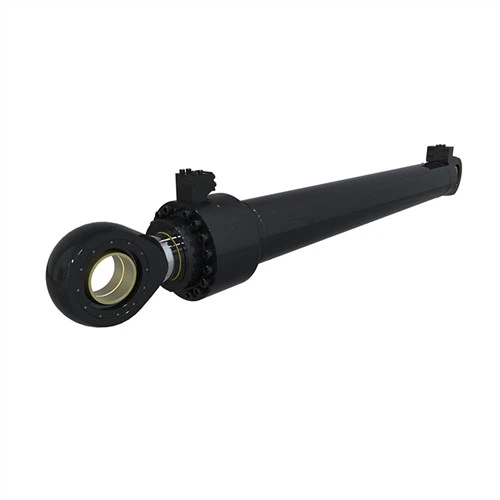
Hydraulic Cylinders for Farm Equipment
Construction Engineering Hydraulic Cylinder
Hydraulic Cylinders for Farm Equipment
Construction Engineering Hydraulic Cylinder

Clevis (cylinder cap)
The clevis is a kind of mounting system for hydraulic cylinders. It allows hydraulic cylinders to pivot in a motion along an axis.
A cylinder cap is where the clevis is attached to, and is one of the most common mounting systems. It’s often used when it requires the cylinder to pivot through an arc, retracting and extending.

End cap (cylinder head)
End caps cover the pressure chamber from one end of the hydraulic cylinder, also known as the cylinder head.
They’re connected to the cylinder’s body through bolts, rods, or threading.

Port
The port is where fluid enters and exits the system. If it’s a double acting hydraulic cylinder, there are two ports located at either end of the cylinder.
Ports need to be secure so as not to allow any leaks to occur.

Piston
Found inside the cylinder, the piston separates the pressure zones inside the cylinder’s barrel. The back and forth action that the piston creates is what generates the power.
Pistons come in two different resting states; sprung in and sprung out, which is when it’s in a retracted position or an extended position.

Piston rod
One of the most critical parts of a hydraulic cylinder, the piston rod extends and retracts, generating the movement that the cylinder requires to function.
It’s attached to the piston and the cylinder head.

Cylinder barrel
Cylinder barrels are made from highly durable materials to endure a lot of stress, as it is what’s keeping the pressure inside the cylinder while housing the piston.

Gland (seal gland)
The gland is equipped with a number of seals to prevent the pressurised fluid from leaking beyond the piston rod or cylinder head.
The seal gland allows for easy removal and replacement of all the seals in the hydraulic cylinder.

Seal
Seals are found all throughout the hydraulic cylinder, and are designed to withstand the constant movement of the piston rod moving in and out of the barrel.
Different kinds of seals are used depending on the hydraulic cylinder’s application.


How to Maintain Agricultural Hydraulic Cylinders


1. Ensure the oil is clean

One of the most important things you can do to maintain your hydraulic cylinder is to make sure the oil is clean and your hydraulic cylinder has enough of it. Filtering the oil in your hydraulic system is critical as particles will move inside the cylinder as it operates.

Dirty oil can quickly cause damage to your hydraulic cylinder and reduce its lifespan. Make sure you clean the oil pan and oil pump regularly to keep your cylinder running smoothly. Oil should always be filtered before it’s applied to your hydraulic cylinders to avoid problems later down the track.

Oil levels are easy to check and even easier to change, but it’s not the only thing you can do to help keep your oil clean. A filter and pressure gauge can also help with the efficiency of your system; the filter will help keep the oil clean, and the pressure gauge will inform you when the filter needs to be replaced. This should allow you to detect a clogged filter before you end up with a dangerous filter bypass issue, where oil flows through the housing without being filtered.

2. Perform regular inspections

Checking your hydraulic cylinders regularly is essential for keeping them in good condition, as you will be able to spot issues and damage sooner. Inspecting your cylinders for damage, wear and tear, and leaks is a simple process that only takes a few minutes but can save you time and money in the long run.

Regular checks are for more than just inspecting for damage. It’s the perfect opportunity to look into your system for other issues, such as misalignment, hydraulic fluid levels, and air in the system. If there is wear on the piston or seals, it will be easier to spot and fix before it becomes a bigger problem. If that wear is one-sided, it’s likely due to misalignment and can be fixed with a quick adjustment.

Corrosion is another example of issues you should be inspecting for. Corrosion is a sign of excess moisture and can indicate the need for a change in hydraulic fluid. Corrosion will not only affect the rod or cylinder, but can also affect the seals in your hydraulic system. Corroded seals can leak to hydraulic fluid leakage or malfunctioning cylinder operation.

By taking a few minutes every week to perform some simple checks on your hydraulic cylinders, you can keep them in good shape all year round.

3. Have spare cylinders handy

Having a spare cylinder on hand can save you a lot of time and money if your main cylinder goes out of service with a mechanical hydraulic breakdown. When your main cylinder fails, you can quickly swap out the spare and get your machine back up and running.

Having replacement cylinders will help you to be proactive and avoid any emergencies, as well as keep your machines running smoothly and without issues. You’ll be able to continue working while the damaged cylinder gets repaired. Avoiding downtime will help you avoid losing time and money while waiting for repairs.

Note that hydraulic cylinders are not interchangeable for all applications, so you’ll need to have the right type of cylinders on hand. Consider things like whether the application needs a single acting or double acting cylinder, as well as appropriate sizing.

When your hydraulic cylinder is away for repairs, things like seals and fluid levels can be checked and changed if necessary. This can take extra time, which you may not be able to afford without having spare cylinders. Changing the seals of a hydraulic cylinder when it’s being rotated out is the most cost-effective way of performing seal replacements, which is also worth considering.

Getting all checks and replacements done at the same time as the repairs allows you to work with your cylinder for longer without needing significant maintenance and repairs.If you’re not confident, a mobile technician can perform hydraulic cylinder replacements on demand.

Checking the condition of your hydraulic system by rotating it out with a spare can give you some insight into the rest of your system. If your hydraulic cylinder is showing signs of contamination or corrosion, it could be the result of a larger issue affecting your whole operation.

4. Maintain & replace accessories where necessary

Maintaining and replacing hydraulic cylinder accessories when necessary is something else you can do to effectively maintain your hydraulic cylinder system. Accessories, such as brackets and ball joints, can easily be replaced when needed and will help keep your system running smoothly.

Hydraulic cylinders are made up of many moving parts, each playing a role in keeping your cylinder working properly and safely. Although these components are smaller in comparison, they serve a vital function and should be maintained and replaced with the same level of attention as the cylinder itself.

Worn hydraulic cylinder parts and accessories will have more slop and give in their motion, which is not what you want from a precision instrument. Many hydraulic cylinders require precision and accuracy, and small inconsistencies with accessories can affect the way the cylinder fires. This can cause vibration and inaccuracy, which can lead to significantly more wear and tear.

5. Maintain hydraulic oil levels

Sufficient lubrication and oil is vital to the health and function of your hydraulic system, and a lack of lubrication can reduce the efficiency or even damage your hydraulic cylinder along with other key hydraulic components. Fluid levels can be checked and monitored with modern tools, which allows for adjustments as needed. This is essential even though most hydraulic systems have a filtration system built-in by default.

Maintaining hydraulic oil levels is one of the most important aspects of keeping your hydraulic system up and running. Although hydraulic cylinders come with reservoirs that maintain lubrication for hours of continuous work, eventually these will need to be refilled.

Be sure to inspect any manuals or consult with the OEM (Original Equipment Manufacturer) for the grade and type of hydraulic oil your system was designed for. Incorrect oil grades can severely impact your hydraulic system in a negative way and it also may not perform to its optimum level.


The Future of Hydraulic Cylinders in Agriculture


The application of hydraulic cylinders in agriculture is continually expanding, driven by technological advancements and the need for sustainable farming practices. Here are some potential future developments:
Autonomous farming: With the rise of autonomous vehicles and robotics, hydraulic cylinders will play a pivotal role in enabling precise control and movement of these machines. Automated agricultural equipment, powered by hydraulic cylinders, will revolutionize farming by optimizing tasks such as planting, spraying, and harvesting.
Precision farming: The integration of hydraulic cylinders with advanced sensing technologies, such as GPS and remote sensing, will further enhance precision farming techniques. Hydraulic systems will enable precise adjustments based on real-time data, resulting in optimized resource allocation, reduced environmental impact, and increased crop yields.
Environmental sustainability: Hydraulic cylinders can contribute to sustainable farming practices by facilitating precision application of fertilizers and pesticides. By minimizing the use of agrochemicals and reducing environmental contamination, hydraulic systems can help preserve soil health and protect water resources.
Hydraulic cylinders have transformed the landscape of agriculture, making farming more efficient, precise, and sustainable. From powering heavy machinery to enabling precise control in irrigation systems and implements, hydraulic cylinders have become indispensable in modern farming practices. As technology continues to advance, the future holds even greater possibilities for hydraulic cylinders in agriculture, paving the way for autonomous farming, precision agriculture, and sustainable food production. With their versatility, adaptability, and numerous benefits, hydraulic cylinders are truly revolutionizing the way we cultivate the land and nourish the world.


Certifications


productcate-1362-552
productcate-1-1
productcate-1-1


Our Factory


Yancheng Haite Machinery Technology Co., Ltd. was founded in 1992, after nearly 30 years of development and growth, has developed into a professional hydraulic equipment and deck machinery manufacturing enterprises, The company covers an area of more than 160,000 square meters, the existing staff 370 people, including 46 engineering and technical personnel, 10 senior engineers.


productcate-1-1

productcate-1-1

productcate-1-1

productcate-1-1


FAQ


Q: What is the primary function of an agricultural hydraulic cylinder?

A: Agricultural hydraulic cylinders convert hydraulic energy into mechanical force and linear motion to perform various tasks such as lifting, pressing, or tilting agricultural machinery components.

Q: What types of hydraulic cylinders are used in agriculture?

A: Single-acting and double-acting cylinders are commonly used in agriculture, with double-acting cylinders being more prevalent due to their ability to provide force in both directions of the stroke.

Q: What is an agricultural hydraulic cylinder?

A: An agricultural hydraulic cylinder is a mechanical actuator that converts the energy from hydraulic fluid into linear force, which is used to perform tasks in agriculture such as lifting, pressing, or moving heavy equipment and materials.

Q: How does a hydraulic cylinder work?

A: It works on the principle of Pascal's law, where pressure applied at any point in the enclosed fluid is transmitted undiminished to every portion of the fluid and the walls of the container. The movement of the piston within the cylinder translates this pressure into force.

Q: How do you select the appropriate hydraulic fluid for an agricultural cylinder?

A: Consider the operating temperature, environmental conditions, the type of contaminants present, and the recommendations of the cylinder manufacturer.

Q: What are hydraulics used for in agriculture?

A: They can efficiently handle heavy loads, operate machinery, and perform tasks such as lifting, digging, and pulling. By adjusting flow rates and pressure levels, farmers can fine-tune the performance of equipment like tractors, harvesters, and sprayers.

Q: What is the purpose of a hydraulic cylinder?

A: These cylinders generate mechanical force in a linear motion for a variety of applications. They are typically used for pressing, pulling, pushing or lifting something that requires exceptional force. If you've ever used a hydraulic jack to raise your vehicle or operated a forklift, you've used a hydraulic cylinder.

Q: What is the function of the hydraulic cylinder in a tractor?

A: Hydraulic cylinders are commonly used in places where heavy loads need to be moved and this requires a great amount of force. As an example, a tractor's front hoist which needs to lift a heavy FIBC. Hydraulic cylinders are designed for specific purpose.

Q: What are the basics of hydraulic cylinders?

A: Cylinders are made up of a steel barrel, a piston connected to a piston rod that moves back and forth, and mounting accessories. They are used in equipment to lift, push, pull and press loads that require exceptional force.

Q: What is the best material for hydraulic cylinders?

A: Most often, the cylinders are made of steel or aluminum. At pressures lower than 10 MPa, cast iron cylinders are used. At pressures higher than 20 MPa, they are made of seamless steel pipe. For pressures above 20 MPa, the pipes are made of steel or forged steel.

Q: How many types of hydraulic cylinders are there?

A: Hydraulic Cylinders come as either Single or Double Acting. If only one chamber is pressurized by the hydraulic fluid, it is a single acting, otherwise it's double acting.

Q: What are the advantages of hydraulic cylinders?

A: Hydraulic cylinders deliver powerful force output due to the incompressibility of hydraulic fluids. Fluid pressure is transmitted equally in all directions, providing high force output. Large piston surface area further enhances force output.

Q: How are hydraulic cylinders classified?

A: The hydraulic cylinders or pneumatic cylinders are classified according to their movement. Hydraulic cylinders or pneumatic cylinders can also be divided into single acting cylinders and double acting cylinders in the following manner.

Q: What is the difference between a balanced and unbalanced hydraulic cylinder?

A: Balanced cylinders have a rod extending from both ends of the cylinder. Unbalanced cylinders have a rod extending from only one end of the cylinder.

Q: What agriculture equipment works on hydraulics?

A: Here are a few examples of the types of machines using hydraulic systems in agriculture: Tractors. Harvesters. Sprayers.

Q: What is the manufacturing process of hydraulic cylinders?

A: Hydraulic cylinders are used in many types of machines and systems for industrial and mobile applications. The manufacturing process of cylinders mainly involves the following steps: design, heat treatment, machining, coating, assembly, and testing.

Q: How are hydraulic cylinders controlled?

A: Meter-in flow control – The most common method to control the speed of a hydraulic cylinder is to limit the rate of flow entering its work ports. You could install meter-in flow control valves directly at the work ports, along the work lines or back at the valve stack or manifold.

Q: What are the parts of the hydraulic cylinder?

A: The hydraulic cylinder's major component is the seamless steel tube that contains the piston. The tube guarantees that the cylinder moves smoothly. It must be able to endure pressure and wear. It is strong enough for secure enclosing of the internal pressure zones.

Q: How do you choose a hydraulic cylinder?

A: The rule of thumb is to choose a cylinder with a tonnage rating of 20% more than required for the load. That compensates for losses like friction from the load, efficiency losses in the hydraulics, actual pressure below the rated system pressure, slip-stick on cylinder seals and bearings, and so on.

Q: What are the important parameters to select a hydraulic cylinder?

A: Those factors include the amount of force required, cylinder mounting style, stroke length, speed, operating pressure, direction of force, and means of stopping the work load after it is put in motion.

As one of the most professional agricultural hydraulic cylinders manufacturers and suppliers in China since 1992, we're featured by quality products and competitive price. Please rest assured to buy cheap agricultural hydraulic cylinders in stock here from our factory. Contact us for customized service.

Hydraulic Cylinders For Farm Equipment, Agricultural Hydraulic Cylinders For Harvesters, Engineering Hydraulic Cylinder

(0/10)

clearall