


When it comes to energy hydraulic cylinders, one important decision to make is whether to use a single - acting energy hydraulic cylinder. As a supplier of energy hydraulic cylinders, I've got a lot of insights on this topic. Let's break down the scenarios where a single - acting energy hydraulic cylinder shines.
1. Simple and Low - Cost Applications
Single - acting energy hydraulic cylinders are a great choice for applications where simplicity and cost - effectiveness are the top priorities. These cylinders work in a straightforward manner - they use hydraulic pressure to extend the piston, and then rely on an external force (like gravity or a spring) for retraction.
For instance, in some basic construction equipment, such as small - scale lifting platforms. These platforms don't require a complex hydraulic system to lift light loads. A single - acting cylinder can be used to raise the platform. Gravity does the job of bringing it back down. Since the cylinder design is relatively simple, there are fewer components involved, which translates to a lower manufacturing cost. This lower cost can be a huge advantage for small businesses or projects with tight budgets.
2. Applications with Unidirectional Force Requirements
If the application only needs a force in one direction, a single - acting energy hydraulic cylinder makes a ton of sense. Take the case of a waste compactor. In a waste compactor, you mainly need to apply a large force to compress the waste material. The cylinder extends under hydraulic pressure to crush the waste. Once the compaction is done, there's no need for a powered retraction. The resetting can be achieved by other mechanical means.
This unidirectional force application is also seen in some simple assembly line operations. For example, in a press - fitting process where a part needs to be pressed into another. The single - acting cylinder can provide the necessary force to complete the press - fitting operation, and then be retracted without the need for a complex hydraulic return mechanism.
3. Backup and Emergency Systems
Single - acting cylinders are often used in backup and emergency systems. In these situations, reliability and simplicity are crucial. For example, in a power plant, there might be emergency shut - off valves. If there's a power failure, the single - acting hydraulic cylinder can be used to close the valves. The cylinder can be designed to operate using a stored hydraulic energy source.
Since the design is simple, there are fewer things that can go wrong during an emergency. And the fact that it only needs to perform a single - direction operation (closing the valve in this case) makes it a reliable choice. In such systems, the single - acting cylinder can be easily integrated with other mechanical components to ensure the smooth operation of the emergency response.
4. Specialized Energy - Related Applications
Wave Power Applications
In wave power generation, single - acting cylinders can play a vital role. The Wave Power Cylinder is designed to capture the energy from ocean waves. Waves move in a relatively one - directional manner, at least in terms of the motion that can be harnessed. Single - acting cylinders can be used to convert the up - and - down motion of the waves into hydraulic energy.
When the wave lifts a floating device connected to the cylinder, the hydraulic fluid is forced through the system, generating power. The retraction of the cylinder can be achieved by the natural movement of the wave or a simple mechanical return mechanism. This setup is well - suited for wave power applications because it matches the unidirectional nature of the wave energy input.
Gas and Oil Exploration and Drilling
In gas and oil exploration and drilling, single - acting energy hydraulic cylinders have their uses. The Gas and Oil Exploration and Drilling Cylinder can be used in various functions. For example, in some drilling equipment, they can be used to apply a constant downward force on the drill bit. This is a unidirectional force application.
The hydraulic pressure in the single - acting cylinder keeps the drill bit in contact with the rock formation, allowing for efficient drilling. Once a certain depth is reached or if there's a need to adjust the drill bit, the retraction can be handled by other mechanical means in the drilling rig. The simplicity of the single - acting cylinder is beneficial in these harsh and remote environments, as it reduces the complexity of maintenance and repair.
Wind Energy Applications
Wind Energy Hydraulic Cylinders also make use of single - acting cylinders in certain aspects. In wind turbines, pitch control systems are used to adjust the angle of the blades. In some cases, single - acting cylinders can be used for this purpose.

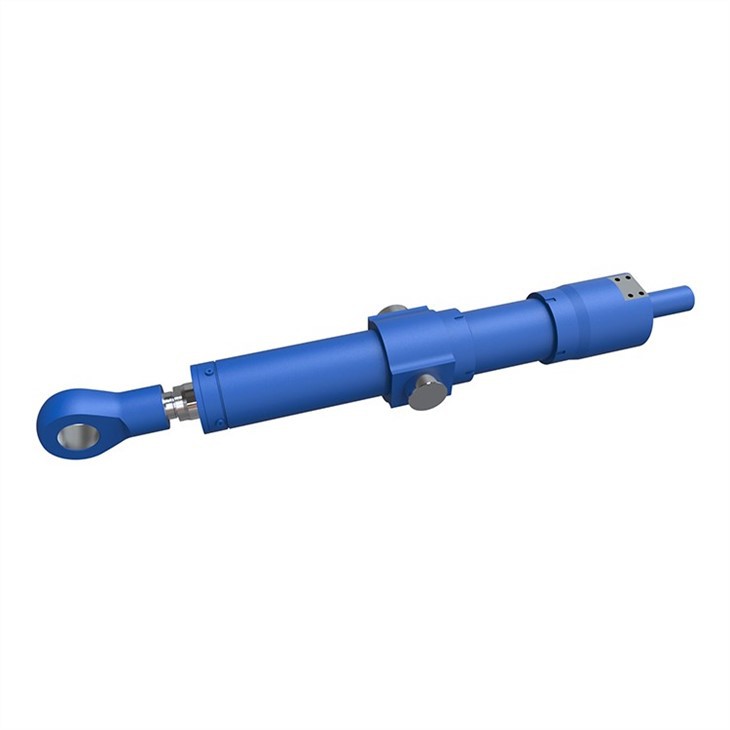
The cylinders can extend under hydraulic pressure to adjust the pitch of the blades to optimize the power output. The retraction can be achieved through a combination of mechanical springs and the natural aerodynamic forces acting on the blades. This setup simplifies the hydraulic system in the turbine, making it more reliable and cost - effective.
Considerations for Using Single - Acting Energy Hydraulic Cylinders
While single - acting energy hydraulic cylinders have many advantages, there are also some things to consider. First, the external force used for retraction needs to be carefully calculated. If the external force is not sufficient, the cylinder may not retract properly, leading to malfunctions.
Second, the pressure requirements for the hydraulic system need to be accurately determined. Since the single - acting cylinder only relies on hydraulic pressure for one - way movement, over - or under - pressurization can cause issues. Over - pressurization can damage the cylinder and other components in the system, while under - pressurization may not provide enough force for the intended operation.
Contact for采购洽谈
If you're considering using single - acting energy hydraulic cylinders for your projects, whether it's for wave power, gas and oil exploration, wind energy, or other applications, feel free to contact us. We at [Supplier Name Omitted] are dedicated to providing high - quality energy hydraulic cylinders tailored to your specific needs. Our team of experts can offer you professional advice on the best cylinder solutions for your projects.
References
- Smith, J. (2020). Hydraulic Systems in Energy Production. New York: Energy Press.
- Brown, A. (2019). Design and Application of Hydraulic Cylinders. London: Mechanical Publishers.
- Green, P. (2021). Wave and Wind Energy Conversion Technologies. Sydney: Renewable Energy Books.