


Hey there! As a supplier of Energy Hydraulic Cylinders, I often get asked about the power consumption of these nifty devices. So, I thought I'd take a deep dive into this topic and share what I've learned over the years.
First off, let's understand what an energy hydraulic cylinder is. These cylinders are used in various energy - related applications, like Wind Energy Hydraulic Cylinders, Wave Power Cylinder, and Seawater Desalination Cylinder. They convert hydraulic energy into mechanical energy to perform specific tasks, such as moving heavy loads, controlling the position of components, or generating power.
Now, the power consumption of an energy hydraulic cylinder isn't a one - size - fits - all answer. It depends on several factors. One of the main factors is the load that the cylinder has to move. Think about it like this: if you're trying to lift a small rock, it doesn't take much effort. But if you're trying to lift a boulder, you need a whole lot more power. The same goes for hydraulic cylinders. The heavier the load, the more power it needs to move it.
Another factor is the speed at which the cylinder operates. A cylinder that moves quickly requires more power than one that moves slowly. This is because moving at a higher speed means the hydraulic fluid has to be pumped through the system at a faster rate, which takes more energy.

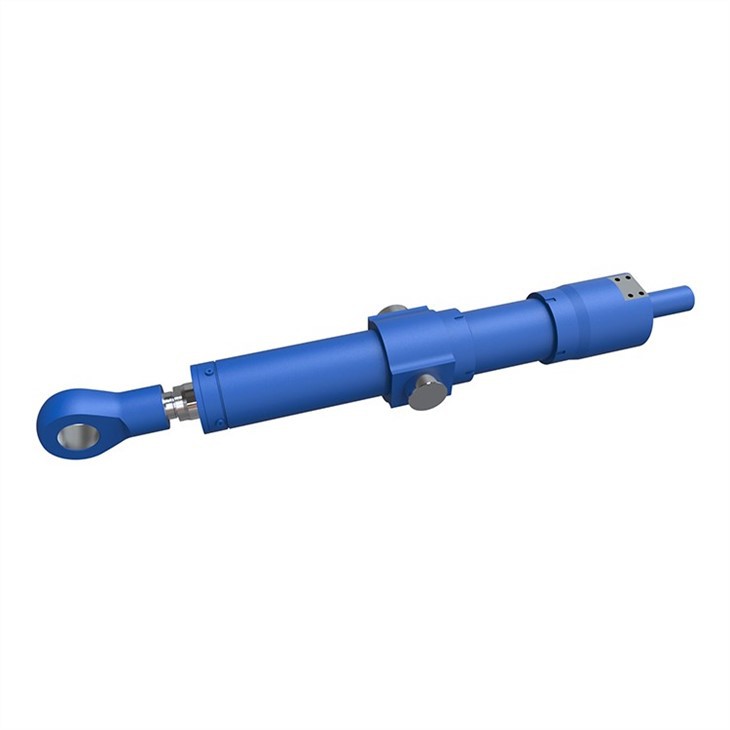
The efficiency of the hydraulic system also plays a huge role. A well - designed and maintained hydraulic system will use less power compared to a poorly designed one. Leaks in the system can cause a significant loss of power. Even a small leak can lead to a continuous loss of hydraulic fluid, which means the pump has to work harder to maintain the required pressure, thus increasing power consumption.
Let's talk about how we measure the power consumption of an energy hydraulic cylinder. Power is usually measured in watts (W) or horsepower (hp). To calculate the power consumption, we need to know the pressure in the hydraulic system and the flow rate of the hydraulic fluid. The formula for power (P) in a hydraulic system is P = Pressure (P) × Flow rate (Q).
For example, if the pressure in the system is 1000 pounds per square inch (psi) and the flow rate is 10 gallons per minute (gpm), we can calculate the power consumption. First, we need to convert these units into SI units. 1 psi is approximately 6894.76 Pa, and 1 gpm is about 0.00006309 m³/s.
The pressure in Pa is 1000 × 6894.76 = 6894760 Pa. The flow rate in m³/s is 10 × 0.00006309 = 0.0006309 m³/s.
Using the formula P = P × Q, the power in watts is 6894760 × 0.0006309 = 4340.02 W. To convert this to horsepower, we divide by 745.7 (since 1 hp = 745.7 W), so it's about 5.82 hp.
In real - world applications, the power consumption can vary widely. In a small - scale seawater desalination plant, the power consumption of the hydraulic cylinders might be relatively low, maybe a few hundred watts. But in a large - scale wind turbine, where the cylinders are used to adjust the pitch of the blades, the power consumption can be several kilowatts.
To reduce the power consumption of energy hydraulic cylinders, there are a few things we can do. Regular maintenance is key. Checking for leaks, replacing worn - out seals, and keeping the hydraulic fluid clean can go a long way in improving the efficiency of the system. Using high - efficiency pumps and valves can also help. These components are designed to minimize energy losses during the operation of the hydraulic system.
Another approach is to optimize the design of the hydraulic circuit. By using the right combination of valves, pipes, and cylinders, we can ensure that the hydraulic fluid flows in the most efficient way possible. This might involve using variable - displacement pumps that can adjust the flow rate according to the load, which helps in saving power.
In the wind energy sector, the power consumption of Wind Energy Hydraulic Cylinders is carefully managed. The cylinders are used to adjust the pitch of the turbine blades to optimize the power output based on the wind speed. The system is designed to use the minimum amount of power necessary to make these adjustments. This not only saves energy but also increases the overall efficiency of the wind turbine.
For Wave Power Cylinder, power consumption is also a crucial consideration. These cylinders are used to convert the energy from ocean waves into electrical power. By carefully controlling the power consumption of the cylinders, we can maximize the amount of power that is generated from the waves.
In seawater desalination plants, Seawater Desalination Cylinder are used to control the flow of water and the operation of the desalination process. Reducing the power consumption of these cylinders can lead to significant cost savings for the plant.
So, if you're in the market for energy hydraulic cylinders and want to keep power consumption in check, it's important to work with a supplier who understands these factors. At our company, we've spent years perfecting the design and performance of our energy hydraulic cylinders. We offer a wide range of cylinders that are designed to be energy - efficient without compromising on performance.
Whether you're in the wind energy, wave power, or seawater desalination industry, we can provide you with the right hydraulic cylinders for your needs. Our team of experts can help you select the best cylinders based on your specific requirements and also offer advice on how to optimize their power consumption.
If you're interested in learning more about our energy hydraulic cylinders or want to discuss a potential purchase, don't hesitate to reach out. We're always here to help you find the perfect solution for your energy - related applications.
In conclusion, understanding the power consumption of energy hydraulic cylinders is essential for anyone using or planning to use these devices. By considering the factors that affect power consumption and taking steps to reduce it, we can make our hydraulic systems more efficient and cost - effective.
References
- "Fluid Power Technology" by Tom Blackburn
- "Hydraulic Systems: Design, Installation, and Maintenance" by John Doe