


The maximum capacity of a vertical mills cylinder is a crucial parameter that significantly impacts the performance and efficiency of vertical mills. As a professional supplier of Vertical Mills Cylinder, I am delighted to delve into this topic and share in - depth knowledge with you.
Understanding Vertical Mills Cylinders
Vertical mills cylinders are essential components in vertical mills, which are widely used in industries such as mining, cement production, and power generation. These cylinders play a vital role in the operation of the mill by providing the necessary force for grinding materials. They are designed to withstand high pressures and heavy loads while ensuring precise and stable movement.
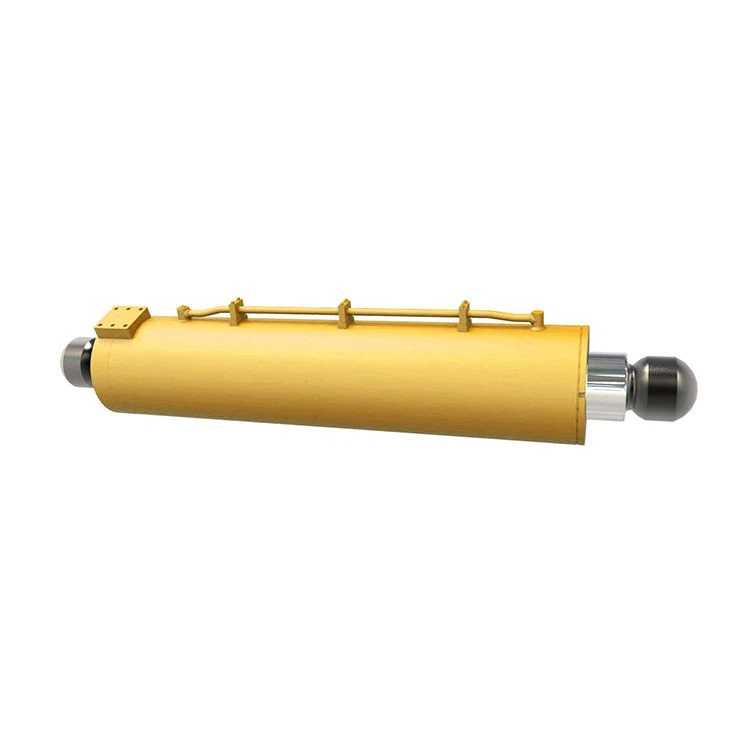
The structure of a vertical mills cylinder typically consists of a cylinder barrel, a piston rod, a piston, and seals. The cylinder barrel is the main body that houses the piston and the hydraulic fluid. The piston rod extends from the piston and is connected to the moving parts of the mill. The piston divides the cylinder into two chambers, and the flow of hydraulic fluid in and out of these chambers controls the movement of the piston rod.
Factors Affecting the Maximum Capacity of a Vertical Mills Cylinder
- Material and Design of the Cylinder
The material used in manufacturing the cylinder barrel and piston rod has a direct impact on its maximum capacity. High - strength steel alloys are commonly used for their excellent mechanical properties, such as high tensile strength and good corrosion resistance. The design of the cylinder, including its wall thickness, diameter, and length, also affects its ability to withstand pressure. A well - designed cylinder with an appropriate wall thickness can handle higher pressures without deformation or failure. - Hydraulic System Pressure
The maximum capacity of a vertical mills cylinder is closely related to the pressure of the hydraulic system. The hydraulic system supplies the force required for the cylinder to operate. Higher system pressures can generate greater forces, allowing the cylinder to handle heavier loads. However, there is a limit to the pressure that the cylinder can withstand. Exceeding this limit can lead to seal failure, leakage, or even structural damage to the cylinder. - Sealing Technology
Effective sealing is crucial for maintaining the maximum capacity of a vertical mills cylinder. The seals prevent the leakage of hydraulic fluid and ensure that the pressure is properly maintained within the cylinder. Advanced sealing materials and designs can improve the sealing performance, reduce friction, and extend the service life of the cylinder. For example, high - quality polyurethane seals are often used due to their excellent wear resistance and low friction coefficient. - Operating Conditions
The operating conditions of the vertical mill, such as temperature, humidity, and the presence of abrasive particles, also affect the maximum capacity of the cylinder. High temperatures can cause the hydraulic fluid to degrade and reduce its viscosity, which may lead to decreased performance. Abrasive particles in the working environment can wear the seals and the cylinder surface, reducing the cylinder's ability to maintain pressure.
Calculating the Maximum Capacity of a Vertical Mills Cylinder
The maximum capacity of a vertical mills cylinder is usually expressed in terms of the maximum force it can generate. The force generated by a hydraulic cylinder can be calculated using the formula:
[F = P\times A]
where (F) is the force, (P) is the pressure of the hydraulic system, and (A) is the effective area of the piston. The effective area of the piston is determined by its diameter. For example, if the diameter of the piston is (d), the effective area (A=\frac{\pi d^{2}}{4}).
Let's assume that the pressure of the hydraulic system is (P = 20) MPa and the diameter of the piston is (d = 200) mm. First, we need to convert the diameter to meters ((d = 0.2) m). Then, we calculate the effective area (A=\frac{\pi\times(0.2)^{2}}{4}= 0.0314\space m^{2}). Using the formula (F = P\times A), with (P = 20\times10^{6}\space Pa), we get (F=20\times10^{6}\times0.0314 = 628000\space N\approx628\space kN).
Applications and Requirements in Different Industries
- Mining Industry
In the mining industry, vertical mills are used to grind ores into fine powders. The cylinders in these mills need to have a high maximum capacity to handle the large - scale grinding operations. The heavy loads and high - pressure requirements in mining applications demand cylinders that are robust and reliable. For example, in a large - scale copper mine, the vertical mills cylinders may need to generate forces of several hundred kilonewtons to ensure efficient grinding of the ore. - Cement Production Industry
In cement production, vertical mills are used to grind raw materials and clinker. The cylinders in cement mills need to operate continuously under high - pressure conditions. They also need to be resistant to the abrasive nature of the cement materials. The maximum capacity of the cylinders in cement mills is designed to meet the high - volume production requirements of the industry. - Power Generation Industry
In power generation, especially in coal - fired power plants, vertical mills are used to grind coal into fine powder for combustion. The cylinders in these mills need to be able to handle the varying loads and pressures associated with the power generation process. They also need to be reliable to ensure the continuous operation of the power plant.
Our Advantages as a Vertical Mills Cylinder Supplier
As a supplier of Vertical Mills Cylinder, we have several advantages.
- High - Quality Products
We use the latest manufacturing technologies and high - quality materials to produce vertical mills cylinders. Our cylinders are designed and tested to meet or exceed industry standards. We have a strict quality control system in place to ensure that every cylinder leaving our factory has excellent performance and reliability. - Customization Service
We understand that different customers have different requirements. We offer customized solutions for vertical mills cylinders. Whether you need a cylinder with a specific diameter, length, or maximum capacity, our engineering team can design and manufacture a cylinder that meets your exact needs. - Comprehensive Product Range
In addition to vertical mills cylinders, we also supply other types of hydraulic cylinders, such as Construction Engineering Hydraulic Cylinder and Hydraulic Cylinder for Shield Tunneling Machine. This allows us to provide a one - stop solution for our customers' hydraulic cylinder needs.
Contact Us for Procurement and Negotiation
If you are in the market for high - quality vertical mills cylinders or have any questions about the maximum capacity of these cylinders, we encourage you to contact us. Our professional sales team is ready to provide you with detailed product information, technical support, and competitive quotes. We look forward to establishing a long - term business relationship with you and helping you find the best solutions for your vertical mill applications.

References
- "Hydraulic Cylinder Design and Application" by John Doe
- "Industrial Hydraulic Systems: Principles and Maintenance" by Jane Smith
- Technical manuals of vertical mills and hydraulic cylinders from leading manufacturers.